
Thailand Industry Report
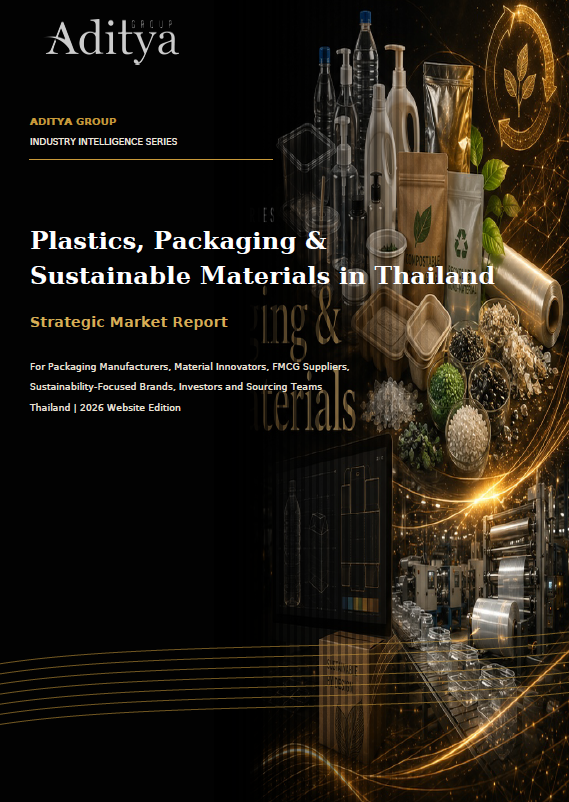
Plastics, Packaging & Sustainable Materials in Thailand
Comprehensive insights into the Thailand industry landscape, covering market dynamics, key trends, opportunities, and how businesses can grow and succeed in this evolving market.
Market
Intelligence
Strategic
Insights
Opportunity
Analysis
Informed
Decisions
Plastic packaging +2.5–3.0% p.a.
Market Signal
Circularity; 6+ trends
Key Trends
Food packaging, EPR, bioplastics, eco claims
Growth Drivers
High
Strategic Relevance
Thailand’s plastics, packaging and sustainable-materials sector is moving from a commodity-led manufacturing industry to a more complex platform for consumer markets, food safety, export compliance, circular-economy execution and brand differentiation. The industry serves food and beverage, personal care, hospitality, e-commerce, retail, healthcare, automotive, electronics, agriculture and industrial supply chains. For foreign companies, the opportunity is not simply to “buy packaging cheaper” but to design the right packaging system for the product, customer, channel, compliance environment and sustainability claim.
File Size: 2.4 MB
PDF / DOC
Detailed analysis, data insights, and expert perspectives.
Increasing domestic and international demand across key segments.
Innovation and digital adoption are reshaping the industry.
ESG and green practices driving responsible
growth.
Government initiatives and incentives boosting investor confidence.
Strong export outlook with access to global markets.
Market Entry
End-to-end support for successful market entry.
Strategic Advisory
Actionable strategies to accelerate growth and competitiveness.
Business Matching
Connect with the right partners and opportunities.
Sourcing & Supply Chain
Reliable sourcing and efficient supply chain solutions.
Regulatory Guidance
Navigate regulations and compliance with confidence.
Growth Partnerships
Long-term partnerships to unlock sustainable growth.
Thailand has several structural advantages: a developed petrochemical and converting base, a strong food and beverage manufacturing ecosystem, regional logistics access, export-oriented factories, packaging design capability, and rising demand for sustainable alternatives. The country’s role in ASEAN manufacturing also means that packaging suppliers often serve both domestic clients and regional export customers.
At the same time, Thailand’s packaging sector is not insulated from regional competition. Vietnam, China, Indonesia, Malaysia and India compete aggressively in price, capacity and export supply. Thailand’s strongest positioning is therefore not always the lowest-cost packaging, but packaging that combines acceptable cost, quality consistency, design capability, reliability, local coordination and market proximity.
Demand Cluster | Thailand Context | Relevance |
Food & beverage | Major packaging demand driver through processed food, beverages, ready-to-eat meals, frozen products, snacks, condiments and export food channels. | High |
Hospitality & tourism | Hotels, resorts, airlines, spas and restaurants increasingly need premium, eco-conscious and guest-facing packaging. | High |
E-commerce & delivery | Urban convenience, online retail and delivery channels create demand for light, protective, branded and cost-efficient packaging. | High |
Cosmetics & wellness | Packaging affects product positioning, regulatory labeling, shelf appeal and premium perception. | High |
Industrial and export goods | Transport packaging, pallets, wraps, protective films, export cartons and industrial components remain critical for trade execution. | Medium-High |
Circular economy | Recycled-content materials, recyclability, EPR readiness and supplier documentation are moving into mainstream procurement. | Rising |
Source note: Thailand’s policy and industry direction is drawn from Krungsri Research, BOI materials, PCD plastic-waste roadmap, SCGP/FTI circular-economy references and sustainable-packaging policy sources.
The industry covers the production, conversion, design, testing, sourcing, distribution and recycling of plastic, paper, bio-based, composite and other packaging materials. It also includes sustainable-material alternatives such as bioplastics, recycled-content materials, molded fiber, bagasse, paperboard, refill/reuse systems, mono-material flexible packaging, recyclable films, compostable packaging and packaging components designed for lower environmental impact.
Segment | Typical Scope | Commercial Relevance |
Primary materials | PE, PP, PET, PVC, PS, ABS, bioplastics, paperboard, kraft paper, molded fiber, aluminum, glass and composite structures. | Raw material availability, price volatility, specification control and suitability for food-contact/export use. |
Conversion & packaging | Injection molding, blow molding, extrusion, thermoforming, flexible packaging, pouches, bags, tubes, boxes, labels, closures and trays. | Main operating layer where quality, MOQ, printing, lead time and tooling decisions shape commercial outcomes. |
Design & branding | Structure, artwork, dielines, color management, multilingual labels, retail display, premium packaging and unboxing experience. | Critical for consumer goods, gifts, hospitality, spa, wellness, food, cosmetics and export retail channels. |
Testing & compliance | Food-contact checks, migration testing, recyclability assessment, packaging performance testing, packaging standards and product claims. | Increasingly important for buyer confidence, retailer approval and cross-border trade. |
Recovery & circularity | Collection, sorting, mechanical recycling, chemical recycling, recycled-content use, EPR readiness and closed-loop packaging systems. | Moves packaging from linear cost item to circular-economy and compliance responsibility. |
Key business models
- Contract packaging and OEM/ODM packaging development for brands, hotels, retail groups and exporters.
- Converter-led supply for flexible packaging, rigid packaging, molded components, bags, films and specialty applications.
- Design-led packaging agencies that combine packaging structure, branding, artwork and market positioning.
- Sustainable-material specialists supplying bagasse, paper, PLA, PBS, PHA, recycled PET, recycled PP, mono-material and compostable alternatives.
- Integrated packaging groups that combine manufacturing, recycling, design, printing, logistics and customer-specific innovation.
Thailand’s packaging industry should not be evaluated in isolation. It is tied to food processing, retail, hospitality, e-commerce, export manufacturing, private-label development, cosmetics, personal care, pet care, health products, industrial goods and branded merchandise. This makes it a strategically relevant sector for Aditya Group’s work across sourcing, market entry, product development and B2B commercialization.
Demand Cluster | Thailand Context | Relevance |
Food & beverage | Major packaging demand driver through processed food, beverages, ready-to-eat meals, frozen products, snacks, condiments and export food channels. | High |
Hospitality & tourism | Hotels, resorts, airlines, spas and restaurants increasingly need premium, eco-conscious and guest-facing packaging. | High |
E-commerce & delivery | Urban convenience, online retail and delivery channels create demand for light, protective, branded and cost-efficient packaging. | High |
Cosmetics & wellness | Packaging affects product positioning, regulatory labeling, shelf appeal and premium perception. | High |
Industrial and export goods | Transport packaging, pallets, wraps, protective films, export cartons and industrial components remain critical for trade execution. | Medium-High |
Circular economy | Recycled-content materials, recyclability, EPR readiness and supplier documentation are moving into mainstream procurement. | Rising |
Risk | Why it Matters | Mitigation |
Greenwashing and unsupported claims | Using vague eco claims without proof can damage credibility and create regulatory or buyer risk. | Use substantiated, specific and jurisdiction-appropriate claims. |
Wrong material substitution | Replacing plastic with paper, bioplastic or compostable material can reduce performance or increase damage/waste. | Conduct performance and use-case testing before rollout. |
MOQ and hidden cost mismatch | Low unit price may hide tooling, mold, printing plate, wastage, storage and cash-cycle costs. | Model total landed and total project cost. |
Supplier overstatement | Some vendors may claim food safety, compostability or recyclability without adequate documentation. | Verify certificates, test reports and material traceability. |
Export market non-compliance | Destination-market regulations may require different labels, materials or documentation. | Confirm buyer and country requirements before packaging approval. |
Quality drift after sampling | Production batches may differ from approved samples due to material substitution or process variation. | Use golden samples, inspections and production batch controls. |
Circular-economy execution gap | A recyclable package may not actually be recycled if collection, sorting or recycling infrastructure is absent. | Define realistic end-of-life pathways and communicate accurately. |
Partner dependency | Poor partner selection can cause delays, pricing disputes, IP leakage or weak delivery control. | Perform due diligence and define governance early. |
Common mistake
The most common mistake is to make packaging decisions after the product, pricing and channel strategy are already fixed. In reality, packaging affects perceived value, logistics, breakage, customs documentation, export labeling, MOQ, working capital and sustainability credibility. It should be built into market entry and product commercialization from the beginning.
The operating environment is fragmented at the lower end and increasingly professionalized at the upper end. Thailand has small converters, family-owned packaging suppliers, mid-sized manufacturers, specialist printers, design agencies, industrial packaging suppliers and large integrated groups. Buyers often face a difficult trade-off between price, quality, lead time, MOQ, English-language coordination, documentation, flexibility and problem-solving capability.
Competitor Type | Strengths | Limitations |
Large integrated packaging groups | Strong manufacturing base, corporate systems, innovation resources and sustainability programs. | Often less flexible for small-volume or exploratory projects. |
Mid-sized converters | Practical manufacturing capability, local relationships and reasonable commercial flexibility. | Quality documentation and export readiness vary widely. |
Small workshops/suppliers | Competitive pricing and flexibility for simple items. | Higher risk in quality consistency, timelines, material proof and communication. |
Design-led packaging firms | Strong branding and premium presentation capability. | May rely on external manufacturers and need execution oversight. |
Importers/traders | Useful for speed and variety, especially China/ASEAN sourcing. | Material traceability, certifications and after-sales accountability require verification. |
Practical operating realities
- MOQs can drive the economics of packaging more than unit price; tooling, mold charges, printing plates and artwork revisions need early visibility.
- Premium packaging often requires multiple vendors: structure, printing, inserts, labels, finishing, accessories and final assembly.
- Sustainable-material substitutions can change durability, heat resistance, water resistance, shelf life, seal integrity, surface finish and logistics damage rates.
- Thai suppliers may be strong technically but weak in strategic documentation, export presentation, English communication or commercial follow-through.
- Quality control should include approved samples, material specifications, color references, packaging stress tests, inspection checkpoints and clear rejection criteria.
The best opportunities in Thailand are not generic plastic trading. They are found where packaging solves a real customer problem: export readiness, premium positioning, sustainability compliance, shelf-life protection, logistics efficiency, low-MOQ product launches, private-label commercialization, or hospitality/retail presentation.
Opportunity Area | Where it applies | Attractiveness | Execution Watchpoint |
Sustainable food-service packaging | Bagasse, molded fiber, paper-based alternatives, recyclable PET/PP, reusable systems and compostable formats for hotels, restaurants, catering and delivery. | Medium to High | Cost sensitivity and green-claim accuracy. |
Premium gift & lifestyle packaging | Rigid boxes, eco-luxury packaging, branded inserts, corporate gifts, festival packs, spa/wellness kits and hospitality amenities. | High | Design execution and MOQ planning. |
Export packaging for SMEs | Packaging redesign, labeling, protection, cartons, inserts, palletization and documentation for export-ready products. | High | Compliance and testing requirements vary by destination. |
Cosmetics, spa and wellness packaging | Bottles, jars, tubes, sachets, refill packs, labels and sustainable secondary packaging. | High | FDA/labeling/claims coordination needed. |
Pet care and consumer lifestyle products | Premium retail packs, refill systems, pouch packaging, molded trays and subscription-commerce packaging. | Medium-High | Brand consistency and supplier reliability. |
Recycled-content and circular packaging | PCR PET/PP applications, recycled paper, closed-loop projects and corporate sustainability-linked packaging. | Rising | Documentation, quality consistency and food-contact limitations. |
Bioplastic and bio-based materials | PLA, PBS, PHA, starch blends and related applications where performance and end-of-life claims are well defined. | Selective | Compostability infrastructure and certification gaps. |
Smart and traceable packaging | QR codes, authentication, product education, after-sales experience and supply-chain information. | Emerging | Data management and UX design. |
Priority opportunities for Aditya Group’s ecosystem
- Givra: premium, sustainable and emotionally designed gift packaging for corporate gifts, hospitality, retail and lifestyle brands.
- Thai Aesthetics: packaging for export-ready Asian products repositioned under Thailand-led branding and product storytelling.
- Natural Senses: packaging for spa, personal care, organic, wellness and refill-oriented products.
- Verdéa: eco-products and sustainable packaging concepts for hospitality, corporate clients and conscious lifestyle categories.
- Novora and consumer tech: protective, premium and compact packaging for smart devices and innovative gifts.
Support Area | What Aditya Group Can Do |
Market intelligence | Industry mapping, buyer segmentation, competitor scan, price benchmarking, demand assessment and opportunity sizing. |
Supplier sourcing & validation | Supplier identification, capability screening, sample coordination, documentation review, quotation comparison and negotiation support. |
Packaging strategy | Material choice, premium positioning, sustainable packaging direction, channel fit, product-packaging alignment and brand-story integration. |
Market entry & setup | Thailand entry strategy, company setup coordination, BOI feasibility assessment, partner model, operating plan and local execution support. |
Business matching | Introductions to converters, packaging designers, trading partners, hospitality buyers, retail channels, exporters and industrial clients. |
OEM/ODM coordination | Product-packaging development, design brief, supplier management, prototype review, production coordination and QC framework. |
Distribution & commercialization | Channel strategy, B2B sales support, partner evaluation, pricing model, sales documentation and local representation. |
Governance oversight | Project timeline, vendor accountability, commercial controls, risk review, reporting and management supervision. |
Client engagement formats
- Industry opportunity assessment for investors, manufacturers and exporters.
- Supplier-sourcing mandate for packaging, sustainable materials or OEM product-packaging projects.
- Thailand market-entry advisory for packaging companies, material producers and product brands.
- Strategic execution support for Thai Aesthetics-style product development, private-label commercialization or export positioning.
- Board/Virtual CEO advisory where packaging is part of a broader market expansion, brand, sourcing or distribution strategy.
Download the full report or connect with our experts to discuss how we can help you grow in this dynamic market.