
Thailand Industry Report
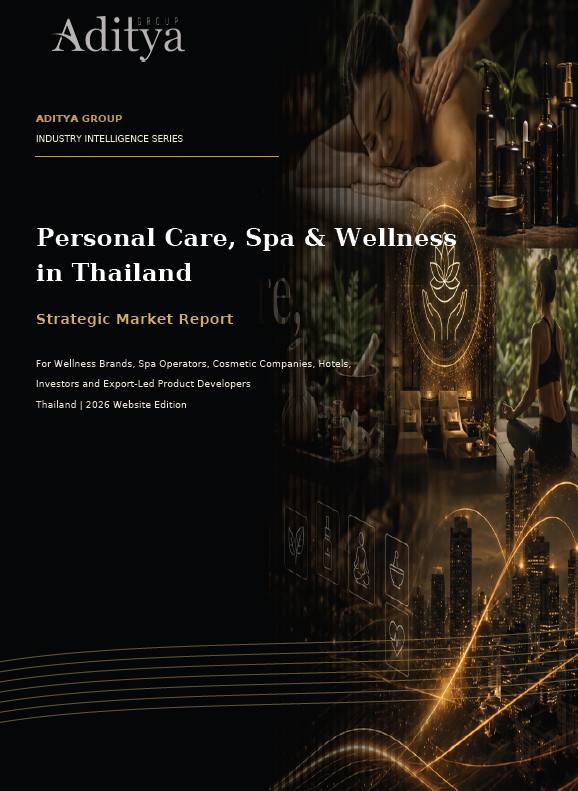
Personal Care, Spa & Wellness in Thailand
Comprehensive insights into the Thailand industry landscape, covering market dynamics, key trends, opportunities, and how businesses can grow and succeed in this evolving market.
Market
Intelligence
Strategic
Insights
Opportunity
Analysis
Informed
Decisions
Wellness linked to USD 26.6B healthcare by 2030
Market Signal
Wellness ecosystem; 6+ trends
Key Trends
Spa heritage, hotel amenities, clean beauty
Growth Drivers
High
Strategic Relevance
Thailand is one of Asia’s most credible wellness markets because it combines five assets that rarely exist together: a globally recognised tourism platform, a deep Thai massage and spa heritage, sophisticated hospitality infrastructure, a developed cosmetics and personal care manufacturing base, and increasing policy support for healthcare and wellness investment.
File Size: 2.4 MB
PDF / DOC
Detailed analysis, data insights, and expert perspectives.
Increasing domestic and international demand across key segments.
Innovation and digital adoption are reshaping the industry.
ESG and green practices driving responsible
growth.
Government initiatives and incentives boosting investor confidence.
Strong export outlook with access to global markets.
Market Entry
End-to-end support for successful market entry.
Strategic Advisory
Actionable strategies to accelerate growth and competitiveness.
Business Matching
Connect with the right partners and opportunities.
Sourcing & Supply Chain
Reliable sourcing and efficient supply chain solutions.
Regulatory Guidance
Navigate regulations and compliance with confidence.
Growth Partnerships
Long-term partnerships to unlock sustainable growth.
Thailand is one of Asia’s most credible wellness markets because it combines five assets that rarely exist together: a globally recognised tourism platform, a deep Thai massage and spa heritage, sophisticated hospitality infrastructure, a developed cosmetics and personal care manufacturing base, and increasing policy support for healthcare and wellness investment. [1] [2]
The opportunity is no longer limited to massage, spa services or souvenir products. Thailand’s personal care and wellness sector now sits at the intersection of tourism, hospitality amenities, natural ingredients, clean beauty, OEM/ODM cosmetics, wellness retreats, preventive health, medical wellness, senior wellness, e-commerce, premium gifting and export-led lifestyle brands. [1] [2] [3]
BOI’s healthcare and wellness material positions the sector around prevention, rehabilitation and long-term health management, with Thailand’s healthcare services market projected to grow from USD 18.3 billion in 2024 to more than USD 26.6 billion by 2030 at roughly 5% CAGR. This broader health-and-wellness context strengthens the spa, wellness and personal care value proposition for investors and brands. [1]
For Aditya Group, this industry is strategically relevant to three business lines: market entry and advisory for wellness brands; sourcing, OEM and export development for Thai Aesthetics / Natural Senses; and travel-led wellness experiences through high-quality hospitality and destination partnerships.
Strategic theme | Implication for investors and brands |
Thailand as wellness platform | A strong country brand supports spa, hospitality, medical wellness, natural products and lifestyle exports. |
From service to product ecosystem | Spa oils, herbal compresses, aroma products, skincare, hotel amenities and wellness gifting can be developed into scalable B2B and export categories. |
Regulated but accessible cosmetics market | Thai FDA cosmetic notification, ASEAN alignment, labelling and responsible-person requirements make compliance manageable but non-negotiable. |
Premiumisation and authenticity | Consumers and hotels increasingly require evidence, safety, ingredient transparency, design quality and credible Thai storytelling. |
Execution gap | Many foreign brands understand demand but underestimate local distribution, supplier validation, regulatory detail, retail economics and Thai buyer behaviour. |
The personal care, spa and wellness industry includes products and services that support physical care, relaxation, prevention, appearance, hygiene, emotional wellbeing and lifestyle enhancement. In Thailand, the sector is highly interconnected with tourism, hotels, hospitals, clinics, retail, e-commerce, manufacturing and export promotion.
2.1 Industry value chain
Layer | Examples | Key economics and success factors |
Ingredients and inputs | Herbs, essential oils, botanicals, coconut derivatives, rice bran, tamarind, turmeric, lemongrass, packaging, fragrances, actives | Traceability, stability, consistent quality, supplier qualification, claim support, cost control. |
Manufacturing and formulation | Cosmetic OEM/ODM factories, spa product makers, GMP facilities, private label producers, amenity suppliers | R&D capability, batch consistency, GMP, minimum order quantities, product documentation, speed to market. |
Regulatory and quality | Thai FDA notification, labelling, ingredient screening, product information file, testing, safety substantiation | Compliance accuracy, responsible person, post-market monitoring, ability to export to ASEAN and other markets. |
Distribution and channels | Hotels, spas, clinics, wellness resorts, retailers, pharmacies, e-commerce, B2B gifting, distributors | Margin structure, channel fit, training, merchandising, reviews, repeat purchase economics. |
Experience layer | Spa treatments, massage, retreats, wellness travel, detox, yoga, longevity programs, family wellness | Service consistency, therapist quality, safety, program design, hospitality integration. |
Brand and export layer | Thai spa brands, natural personal care lines, hotel amenity collections, wellness gifting, clean beauty exports | Positioning, packaging, certification, market access, buyer trust, storytelling and B2B collateral. |
2.2 Core segments
- Spa and massage services: traditional Thai massage, oil massage, aromatherapy, body scrubs, herbal compress treatments and resort spa programs.
- Personal care products: skincare, bath and body, haircare, oral care, deodorants, hygiene products, men’s grooming and family care.
- Spa products and amenities: massage oils, balms, scrubs, candles, diffusers, soaps, shampoos, lotions, amenity kits and branded hotel-room experiences.
- Wellness tourism: retreats, wellness resorts, nutrition programs, mental wellbeing, sleep, yoga, preventive care and longer-stay restorative travel.
- Medical wellness and longevity: anti-aging, rehabilitation, preventive diagnostics, aesthetic clinics and hospital-linked wellness programs.
- OEM/ODM and private label: formulation, packaging, contract manufacturing and export-oriented product development.
Demand driver | Market effect |
Tourism recovery and quality-led tourism | International visitors create demand for spa experiences, hotel amenities, wellness packages, gifting and Thai-origin products. |
Wellness tourism positioning | TAT continues to promote wellness as part of Thailand’s high-value tourism narrative, including recognition as a global spa and wellness destination and hosting of the Global Wellness Summit 2026 in Phuket. |
Ageing and preventive health | Senior wellness, rehabilitation, mobility, sleep, stress management and preventive-care offerings are becoming more relevant. |
Clean beauty and ingredient transparency | Customers increasingly ask what is inside the product, where it came from, and whether claims are credible. |
Hotel and villa upgrade cycle | Premium properties need differentiated amenities, spa retail products and in-room wellness experiences. |
E-commerce and social discovery | Beauty and wellness products can scale faster through content, reviews, livestreaming, marketplaces and direct-to-consumer channels. |
Thailand’s wellness credibility is strengthened by official tourism promotion. TAT announced in 2025 that Thailand was recognised as a Top Global Spa & Wellness Destination, and Thailand will host the Global Wellness Summit 2026 in Phuket from 10-13 November 2026.
Risk | Why it happens | How to reduce it |
Overestimating demand | Product looks innovative but lacks Thai buyer education, channel support or clear use case. | Run market testing and structured buyer interviews before bulk orders. |
Weak supplier selection | Factory promises exceed actual quality, documentation or delivery capability. | Use supplier scoring, sample testing, reference checks and QC checkpoints. |
Compliance delay | Wireless, battery, safety or labeling rules are discovered too late. | Screen compliance before pricing and partner commitments. |
Margin erosion | Duties, freight, channel margins, returns and marketing costs are underestimated. | Build full landed-cost and channel-margin model. |
Poor after-sales support | No spare units, repair pathway, Thai-language support or warranty reserve. | Create warranty SOP and allocate service responsibility before launch. |
Channel conflict | Online, retail and distributor pricing becomes inconsistent. | Set channel policy, MAP-style guidance and reporting structure. |
Product obsolescence | Fast innovation cycle and short product life. | Plan SKU refresh, inventory discipline and modular product roadmap. |
Data/security concerns | Connected devices may raise enterprise or consumer trust questions. | Review data flows, firmware, app permissions and vendor credibility. |
Partner misalignment | Distributor wants exclusivity without investment or performance. | Use milestone-based exclusivity and measurable KPIs. |
Thailand’s personal care and wellness sector is fragmented. It includes world-class hospitals and resorts at the top end, strong local spa brands, many SME cosmetic producers, informal massage operators, boutique wellness retreats, OEM manufacturers, online sellers and imported beauty brands. The fragmentation creates opportunity but also due-diligence risk.
Competitive layer | Typical strengths | Typical weaknesses |
Established Thai spa brands | Thai identity, retail presence, hotel familiarity, product range | May be expensive, less flexible for custom development or export exclusivity. |
OEM/ODM factories | Manufacturing capacity, formulation library, packaging options, speed | Quality variation, MOQ constraints, weak brand strategy support, documentation gaps. |
Hotels and resort spas | Service credibility, guest access, premium positioning | Operational focus may limit product scaling and external distribution. |
Imported beauty brands | Brand equity, marketing budgets, perceived quality | Higher price, less local authenticity, regulatory and distributor dependence. |
SME natural brands | Authenticity, ingredients, founder stories, flexibility | Inconsistent packaging, claims, documentation, supply chain and export readiness. |
6.1 Operating realities
- Margins can be attractive, but channel commissions and promotional costs can erode profitability quickly.
- Spa and wellness services are labour-intensive; therapist training, turnover and service consistency are central risks.
- Product claims must be disciplined. Overclaiming can create regulatory, reputational and export problems.
- Packaging quality is often the difference between local gift-shop perception and credible international buyer interest.
- Supplier due diligence should verify licences, production standards, ingredient sourcing, batch records and export documentation.
The best opportunities are in segments where Thailand has both authenticity and execution capability. Aditya Group sees four clusters with high relevance for investors, hotel groups, product brands and foreign entrants.
Opportunity cluster | Attractive plays | Why it matters |
Thai spa and personal care product lines | Massage oils, balms, scrubs, soaps, lotions, candles, diffusers, herbal compresses, aromatherapy kits | Directly leverages Thailand’s spa reputation and can sell through hotels, spas, gifting, exports and e-commerce. |
Hotel and villa amenities | Custom amenity programs, refill systems, in-room wellness kits, branded scent identity, premium bathroom collections | B2B recurring demand with strong branding impact and potential link to Thai Aesthetics / Natural Senses. |
Wellness retreat and travel programs | Executive reset, burnout recovery, family wellness, senior wellness, yoga-light, longevity-linked retreats | Thailand is internationally credible, but operators need stronger design and trusted partner networks. |
OEM/ODM and export development | Private label skincare, spa retail products, natural personal care, ASEAN export-ready products | Manufacturing capability exists, but many clients need help with concept, supplier validation, documentation and market access. |
Wellness gifting and corporate programs | Premium wellness boxes, employee wellbeing gifts, hotel VIP kits, family-office gifting, spa vouchers with products | Combines product sourcing, design, fulfilment, packaging and relationship-led B2B sales. |
5.1 High-potential customer groups
- Foreign cosmetic and wellness brands seeking Thailand distribution, manufacturing or ASEAN entry.
- Hotels, resorts, villas and serviced residences seeking differentiated amenities and spa retail lines.
- Thai SMEs with good products but weak branding, packaging, export documentation or buyer presentation.
- Corporate HR and executive teams seeking wellness gifting, retreats and employee wellbeing experiences.
- Investors evaluating spa chains, wellness retreats, aesthetic clinics, product brands or healthcare-wellness platforms.
Client need | Aditya Group support |
Market research and feasibility | Demand assessment, competitor mapping, channel analysis, pricing architecture, regulatory watchpoints and opportunity sizing. |
Market entry strategy | Entry route selection, partner search, business model design, distributor/retailer/hotel-channel strategy and localisation. |
Supplier and OEM sourcing | Identify and screen cosmetic, spa-product, packaging, amenity and wellness-product suppliers; compare MOQ, price, quality and documentation. |
Regulatory navigation | Coordinate Thai FDA notification pathway, labelling checks, claim discipline and documentation with qualified regulatory partners. |
Brand and product development | Product architecture, packaging direction, brand story, B2B presentation, sample kit and buyer-facing materials. |
Hospitality and spa partnerships | Introduce suitable hotels, resorts, spas, villas, wellness retreats, corporate buyers and B2B channels where commercially relevant. |
Travel and wellness program design | Design premium wellness travel concepts, retreats, executive-reset programs and partner-led destination experiences. |
Execution support / Virtual CEO | Vendor coordination, project governance, sales follow-up, operating dashboards, launch discipline and practical troubleshooting. |
Download the full report or connect with our experts to discuss how we can help you grow in this dynamic market.